Read More


.jpg)
The Workplace Decision Framework That India's Fastest Growing Enterprises Are Using
June 8, 2026



The evaluation is not where enterprise office decisions are won or lost. The conversation before it is.
Most enterprise office decisions do not fail because of bad spaces. They fail because the organisations making them never agreed on what a good outcome looked like before they started looking.
Six departments are involved in almost every enterprise workspace decision. Each one is solving a different problem. Each one has a different definition of success. And in most organisations, those six definitions are never reconciled before the evaluation begins.
The result is a process that runs for months, consumes significant leadership bandwidth, and produces an outcome that is partially right for everyone and fully satisfying for none of them.
The organisations that get this right do one thing differently. They build the stakeholder map before they build the shortlist.
Why the Process Breaks Before It Begins
The conventional explanation for slow enterprise decisions is bureaucracy. The more accurate explanation is misalignment. A brief goes out. Vendors are identified. Presentations happen. A shortlist forms. A decision gets made.
The problem with this sequence is structural. By the time the shortlist forms, each department has already developed preferences based on its own priorities.
HR has a favourite location. Finance has a preferred commitment structure. IT has flagged a compliance concern that nobody else has read yet. Admin has a reservation about the building management that got noted and forgotten. When these perspectives eventually surface, the evaluation has already narrowed and the timeline is under pressure.
Gartner research indicates that the average B2B purchase decision inside a large enterprise involves eleven stakeholders. For a workspace decision that touches HR, Finance, IT, Admin, Procurement, and Leadership simultaneously, that figure is likely conservative. Yet most workspace evaluations are designed for one decision maker. That mismatch is where the process breaks.
The Six Stakeholders and What Each One Actually Needs
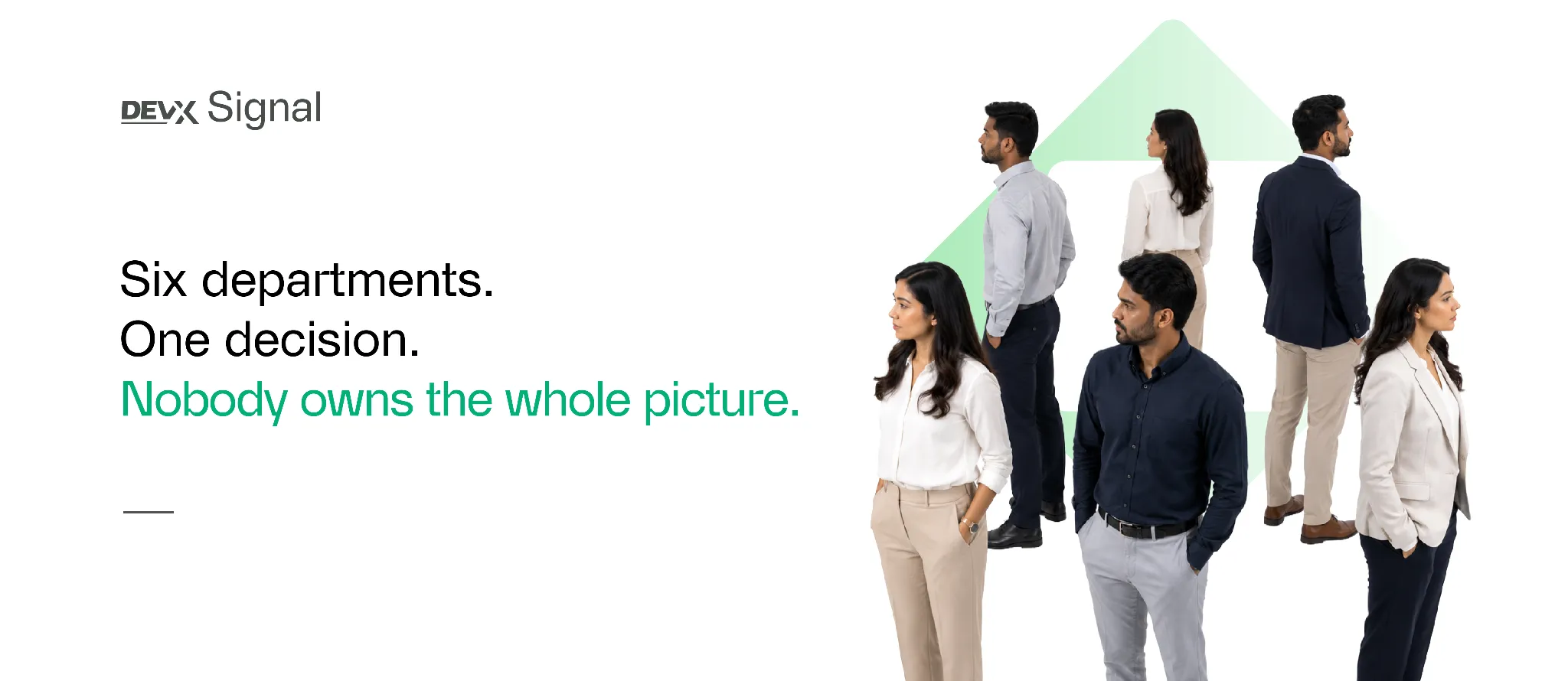
Understanding how enterprises choose office space begins with understanding what each function brings to the decision. These are not six versions of the same priority. They are six distinct problems that a single workspace decision has to solve.
HR Is Solving a Talent Problem
For HR, the workspace decision is a talent decision. The office is a recruiting argument and a retention signal. JLL research found that 84 percent of employees in India value a workplace in a vibrant location. When the office fails to make that argument, the cost does not show up in the facilities budget. It shows up in attrition numbers and declined offers six months later.
What HR needs from a workspace decision is simple. A space that helps the company win the people it is trying to hire and keep the people it already has..
Finance Is Solving a Commitment Problem
Finance is not trying to spend less. Finance is trying to stay free. A long lease is a constraint on strategic flexibility. Any Finance leader who has navigated a painful lease renegotiation will spend the rest of their career making sure it does not happen again.
ICRA has noted that the share of flex workspaces in India's commercial office segment is expected to more than double to between 12.5 and 13.5 percent by March 2027, from 5.3 percent in FY2020. That shift is not a cost story. It is a flexibility story. The workspace providers who speak Finance's language lead with commitment structures and exit provisions, not floor plans.
IT Is Solving a Compliance Problem
IT's requirements in a workspace decision are non-negotiable. Network segregation, data residency compliance, physical access controls, dedicated connectivity. For every enterprise handling sensitive data and every global capability centre in India, these are legal and operational requirements, not preferences.
The structural problem is that IT is almost always brought in after preferences have formed. The most expensive IT conversation in any office decision is the one that happens after the contract is signed.
Admin Is Solving an Operations Problem
Admin does not need the most impressive building. Admin needs a building that works every day for the duration of the agreement. Reliable facilities management. An escalation path that reaches someone who can solve problems, not document them.
Their voice in workspace evaluations tends to be the quietest. The consequences of overruling them tend to be felt every single day of the lease.
Procurement Is Solving a Process Problem
Procurement is either absent from workspace decisions or arrives too late. When absent, organisations sign agreements with gaps they should not have accepted. When they arrive late, everything slows down for documentation that should have been prepared from the start.
The workspace providers that move through procurement without friction are the ones who prepare the comparison frameworks, service level agreements, and reference client lists before they are asked for.
Leadership Is Solving a Continuity Problem
Leadership's stated priorities are speed and brand. Move fast. Create a space that reflects where the company is going. The unstated priority is continuity. The genuine concern is not whether the space is impressive. It is whether the transition will be managed well enough to protect operational performance.
What leadership actually wants is a partner they can trust to hold the full outcome together. Not just the lease. Everything.
80 percent of the global workforce reports lacking the time or energy to do their work.
Source: Microsoft Work Trend Index 2025
Where the Process Breaks Down

The dysfunction in enterprise workspace decisions is not caused by unreasonable people. Every function described above is solving a genuine problem with legitimate requirements. The dysfunction is structural.
Each function optimises for its own priority within its own timeline, without visibility into the constraints the other five functions are managing. The HR leader does not know what exit clause Finance needs. Finance does not know what IT is going to flag when they review the shortlist. Admin does not know whether their concerns about the facilities team have been communicated to the vendor or noted and forgotten. Procurement does not know whether the documentation they will need has been requested.
The result is a decision that is partially right for every function and fully satisfying for none of them. And a process that takes significantly longer than it needs to, not because the decision is difficult but because the information required to make it well is distributed across six rooms that are not consistently talking to each other.
What Changes When the Process Works
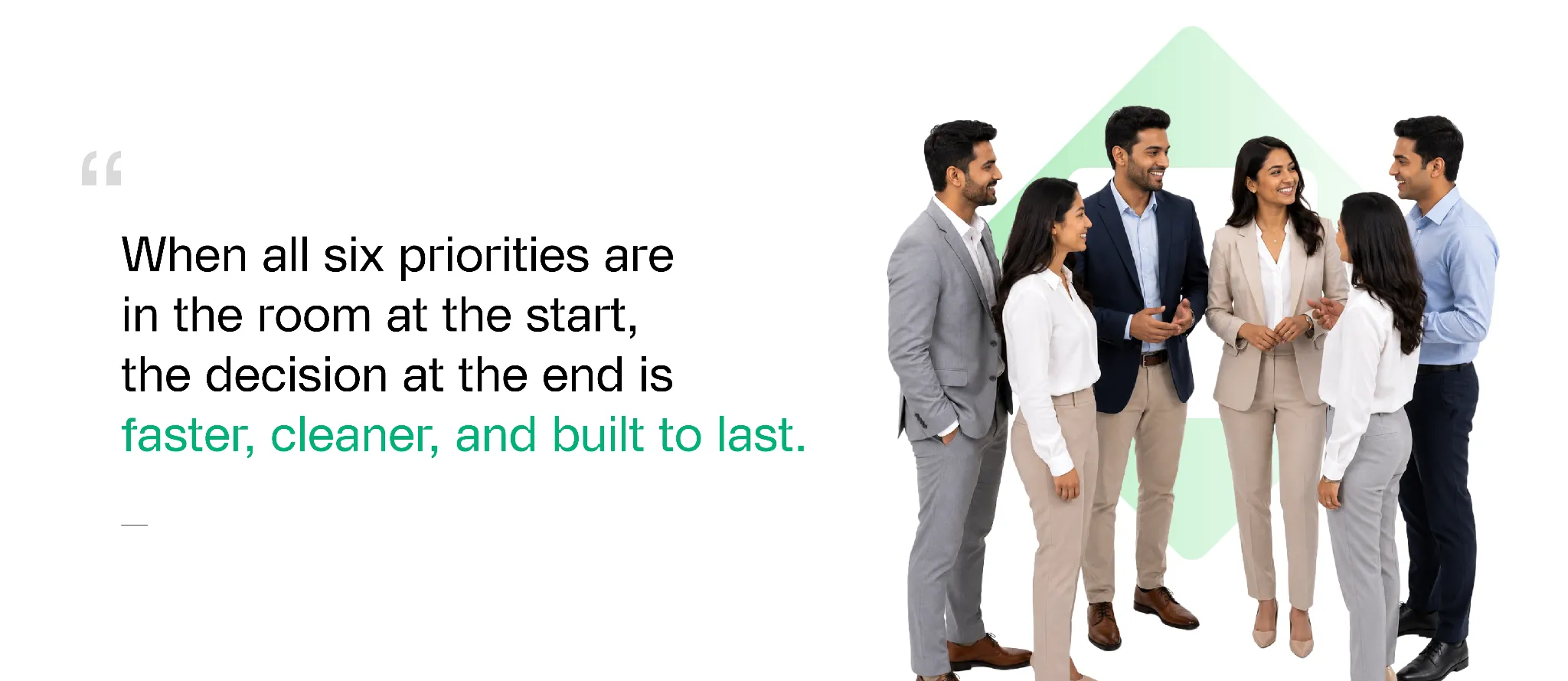
The enterprises that make workspace decisions efficiently share a common structural characteristic. They bring all six functions into the evaluation early, before options are presented rather than after. They establish shared success criteria across functions before the shortlist forms. And they assign clear accountability for the full outcome rather than leaving the integration of six partial views to chance.
India's flexible office space market is estimated at 6.81 billion USD in 2026 and is projected to reach 12.87 billion USD by 2031, growing at a compound annual rate of 13.58 percent. India currently has approximately 1,850 global capability centres employing nearly 2.2 million people, with these centres adding between 80,000 and 120,000 seats annually. CBRE's 2025 India Office Occupier Survey found that 72 percent of occupiers expect to expand their portfolio by 10 percent or more over the next two years.
The enterprises that make them well share one structural characteristic. They bring all six functions into the conversation before the evaluation begins. They establish shared success criteria across departments before options are presented. They assign clear accountability for the full outcome rather than managing six partial views in parallel.
The workspace partners that support this kind of decision-making are not simply providing space. They are providing the operational intelligence, the cross-functional documentation, and the integration that makes a six-stakeholder decision feel manageable rather than exhausting.
An office is not a building transaction. It is a business decision made by six functions solving six different problems at the same time. The enterprises that understand this build the stakeholder map first. Everything else follows from that.
The organisations that make great workspace decisions treat it as a business decision made by the full organisation, not a real estate transaction managed by one department.
More Insights



.png)

%20(1).webp)
Thank you for your comment! It has been successfully submitted and will appear once it has been reviewed and approved.