Read More



What Employee Experience Actually Means
June 24, 2026




Most companies think they are building it. Most employees say they are not experiencing it. Here is what is missing from the conversation.
Employee experience is one of the most used and least clearly defined terms in modern workplaces. Every company claims to invest in it. Most annual reports mention it. HR decks are built around it. And yet ask ten leaders to define it precisely and the answers will diverge immediately, because the term has been stretched to cover so many things that it has quietly lost its meaning.
That looseness is not harmless. When a term means everything, it solves nothing. Companies that define employee experience narrowly solve it narrowly. If they define it as perks, they create more perks. If they define it as culture messaging, they produce more messaging. If they define it as the onboarding experience, they improve onboarding and leave everything else unchanged.
A clearer definition does not just help HR communicate better. It helps HR, Operations, Finance, IT, and leadership make better decisions about the things that actually shape how work feels every day.
What Employee Experience Is Not
Before defining what employee experience is, it is worth being precise about what it is not. Not because these things are bad, but because confusing them with experience itself is exactly how companies end up investing in the wrong places.
Employee experience is not perks. Free lunch, a games room, and a wellness budget are amenities. They improve the surface of work without changing the substance of it. An employee whose expense report takes three weeks to approve, whose laptop crashes twice a week, and whose manager gives contradictory feedback in consecutive meetings is not having a good employee experience, regardless of what the pantry looks like.
Employee experience is not office events. Team outings, town halls, and culture days are moments. They are not the experience itself. Experience is not what happens on the days the company plans something. It is what happens on every other day.
Employee experience is not employer branding. What a company says about itself publicly is not the same as what employees encounter privately. The gap between the two is one of the most reliable predictors of attrition.
Employee experience is not a culture statement. Values on a wall are intentions. Experience is what happens when those intentions meet daily operational reality. When they align, the culture feels real. When they do not, employees notice before leadership does.
What Employee Experience Actually Is
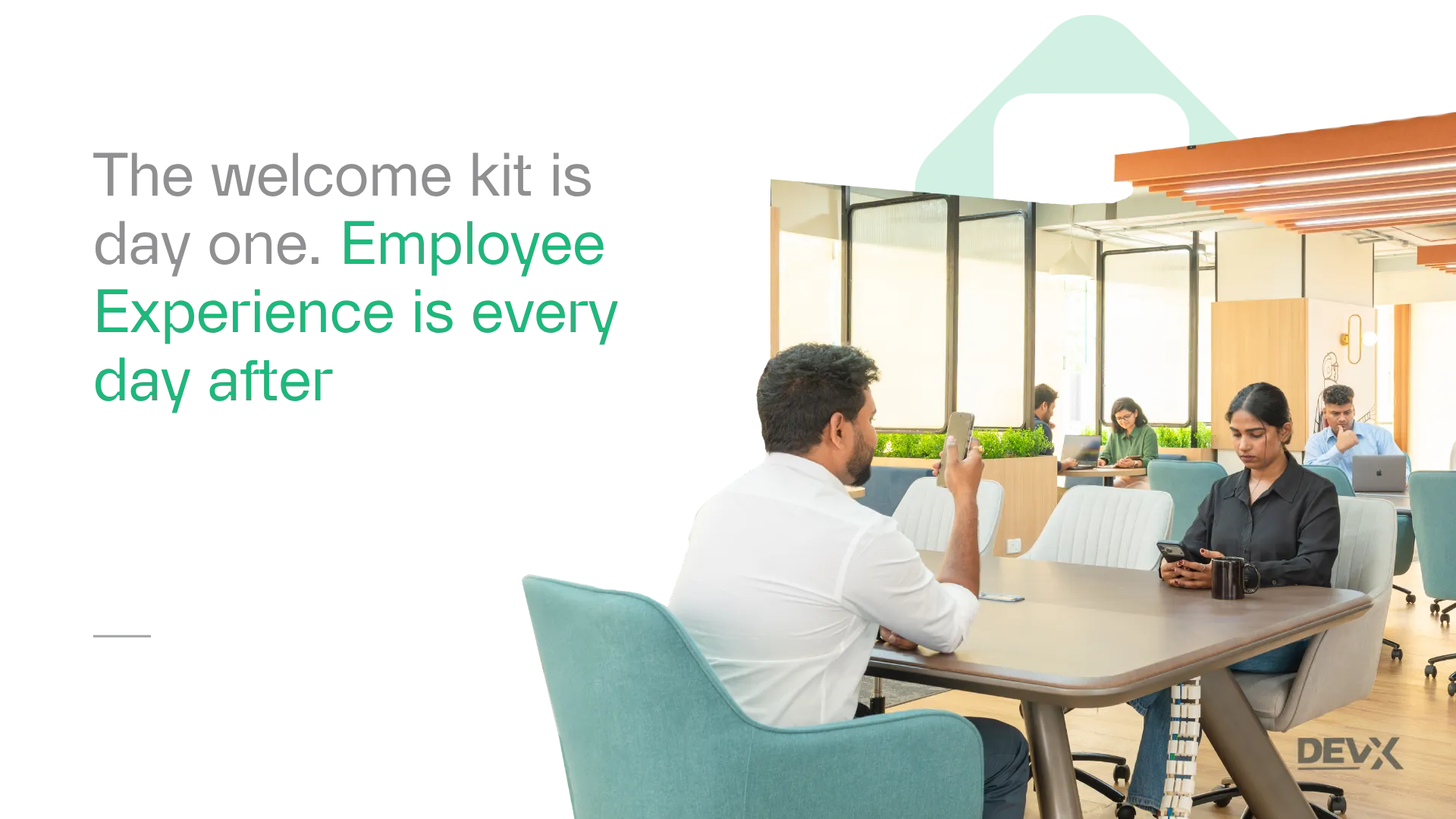
Employee experience is the everyday experience of how easy, clear, supported, and effective it feels to do work inside a company.
It is not one thing. It is the accumulation of every interaction an employee has with the systems, spaces, tools, people, and processes around them. Most of those interactions are not designed. They are the product of decisions made by different functions with different priorities, none of whom were thinking about the sum total of what those decisions would feel like to the person doing the work.
That accumulation happens across nine specific layers.
Systems — the processes and workflows that govern how work gets done. Whether approvals are proportionate to the decisions they govern. Whether information is accessible or buried. Whether the operational design reduces friction or creates it.
Environment — the physical space where work happens. The quality of the office, the acoustic conditions, the light, the availability of quiet space for focused work and open space for collaboration. The environment is not the whole of employee experience but it shapes a significant part of it every day.
Tools — the technology and equipment employees use to do their work. Whether tools are fit for purpose, reliable, and integrated. Whether the technology infrastructure supports the work or works against it.
Support — whether employees have access to the help, guidance, and resources they need when they need them. Not the existence of support systems but the practical experience of using them.
Service — the operational layer that keeps the working environment functioning. Facilities management, IT support, HR operations. The quality of service is felt most clearly in its absence. When it works, it is invisible. When it does not, it becomes the only thing people are talking about.
Leadership responsiveness — whether managers and leaders are available, clear, and consistent. Whether decisions are communicated with enough context for people to understand them. Whether the feedback loop between employees and leadership produces any visible change.
Reliability — whether the things employees depend on work consistently. The wifi. The meeting rooms. The processes. The commitments made by managers and the organisation. Reliability is the foundation of trust and trust is the foundation of everything else.
Flexibility — whether the organisation gives employees enough autonomy over how, where, and when they work to allow them to do their best work. Not unlimited flexibility but appropriate flexibility, calibrated to the nature of the work and the needs of the team.
Belonging — whether employees feel that they are seen, valued, and included. Whether the organisation's culture reflects its stated values in daily interactions, in who gets heard in meetings, in how recognition is distributed, and in how difference is treated.
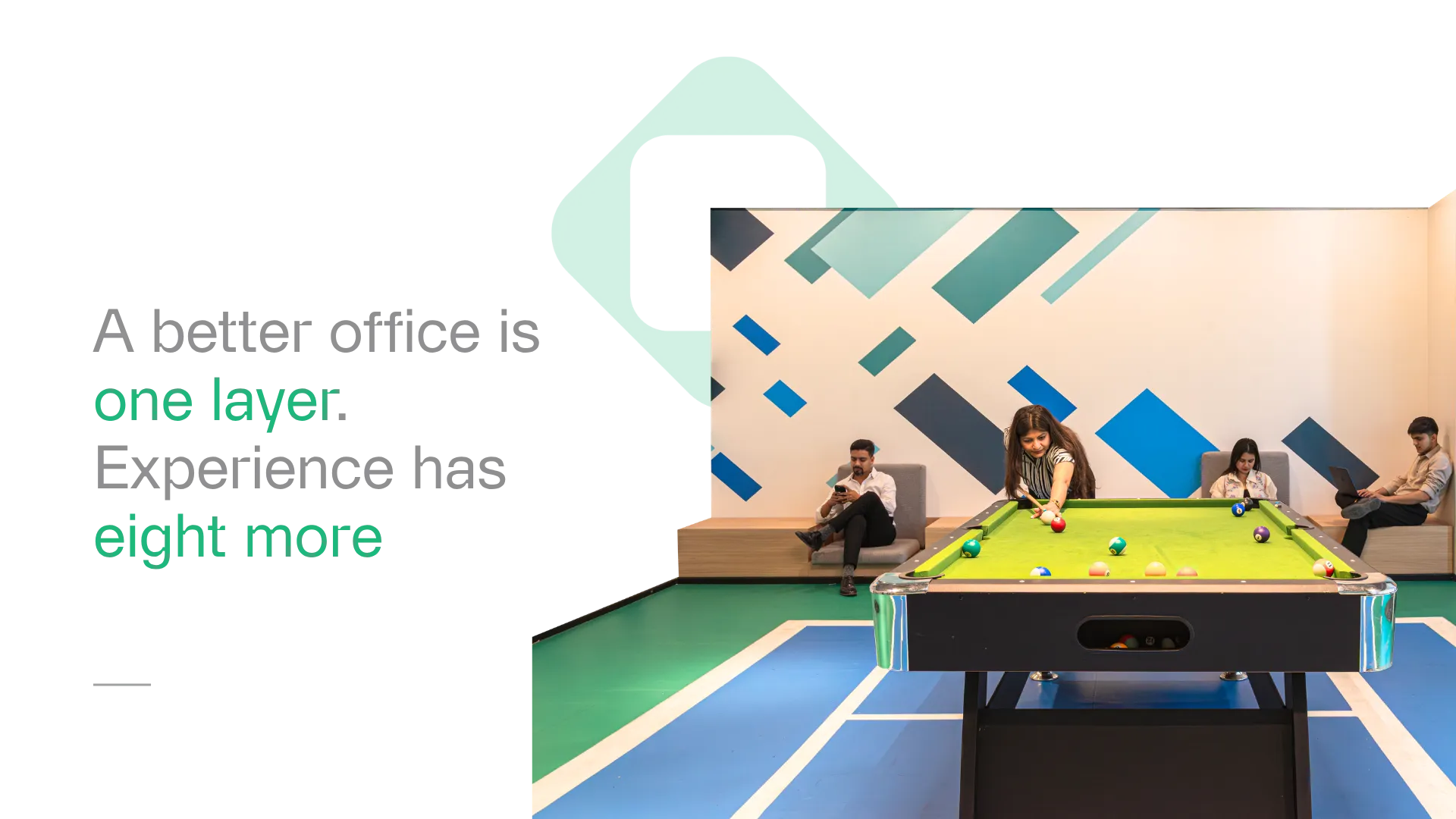
These nine layers are not independent. A company can invest significantly in environment and belonging while leaving systems and reliability broken, and the experience employees have will reflect the weakest layers more than the strongest ones. Experience is not the average of the nine. It is closer to the minimum.
Why Workplace Belongs Inside Employee Experience
The physical workplace is one of the nine layers, not the whole of employee experience and not separate from it. It deserves specific attention because it is the layer most companies either overinvest in aesthetically or underinvest in operationally.
Workplace shapes daily experience because it affects focus, collaboration, movement, comfort, support, and pride. An employee who spends eight hours in a space that is acoustically broken, poorly lit, and operationally unreliable is having a worse experience than the same employee in a space that supports their work, regardless of how similar the two offices look in photographs.
The mistake is treating workplace as an experience initiative in itself. A new office does not fix a broken system layer. A beautiful fitout does not compensate for a dysfunctional service layer. Workplace is a significant lever. It is one lever among nine.
Deloitte's Global Human Capital Trends research found that 80 percent of executives rate employee experience as important or very important. Only 22 percent report that their companies excel at building a differentiated employee experience. The gap is not in awareness. It is in the scope of what companies are trying to change.
A better office is not a better employee experience. It is a better environment inside an experience that has eight other dimensions.
Why This Definition Matters
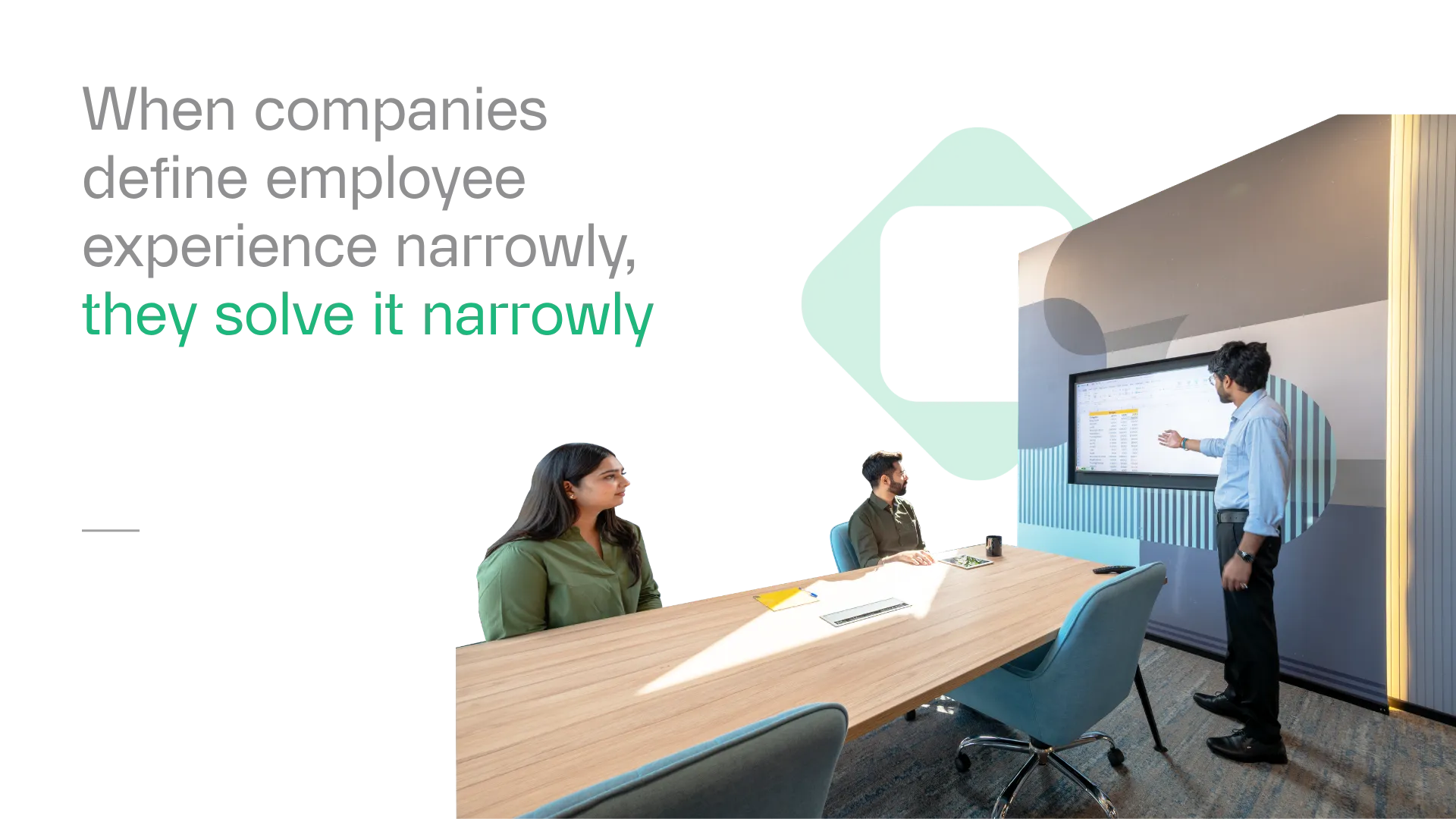
If experience is defined as perks, the solution is more perks. If it is defined as culture events, the solution is more events. If it is defined as the onboarding journey, the solution stops at month one. None of these are wrong. All of them are insufficient.
A broader definition changes what gets measured, what gets funded, and who is accountable. It moves employee experience from a programme HR runs to a condition the whole organisation creates. It puts systems and reliability on the same agenda as belonging and culture. It makes Operations and IT and Finance part of the conversation rather than functions that occasionally receive the results of an engagement survey.
IBM's Smarter Workforce Institute research found that only 16 percent of employees report a positive employee experience across all dimensions. That figure tells you something precise. The investment is happening. The experience is not landing. The definition is where the gap begins.
Gallup's research consistently finds that only 23 percent of employees globally are engaged at work. The primary driver of disengagement is not compensation or benefits. It is the accumulated friction of daily work experience across the nine layers above. Employees do not become disengaged in a single moment. They become disengaged through the repeated experience of systems that do not work, environments that do not support them, and organisations that do not deliver on what they say they value.
The DevX Signal Point of View
Employee experience is not only what companies promise people. It is what people repeatedly experience while trying to do their work.
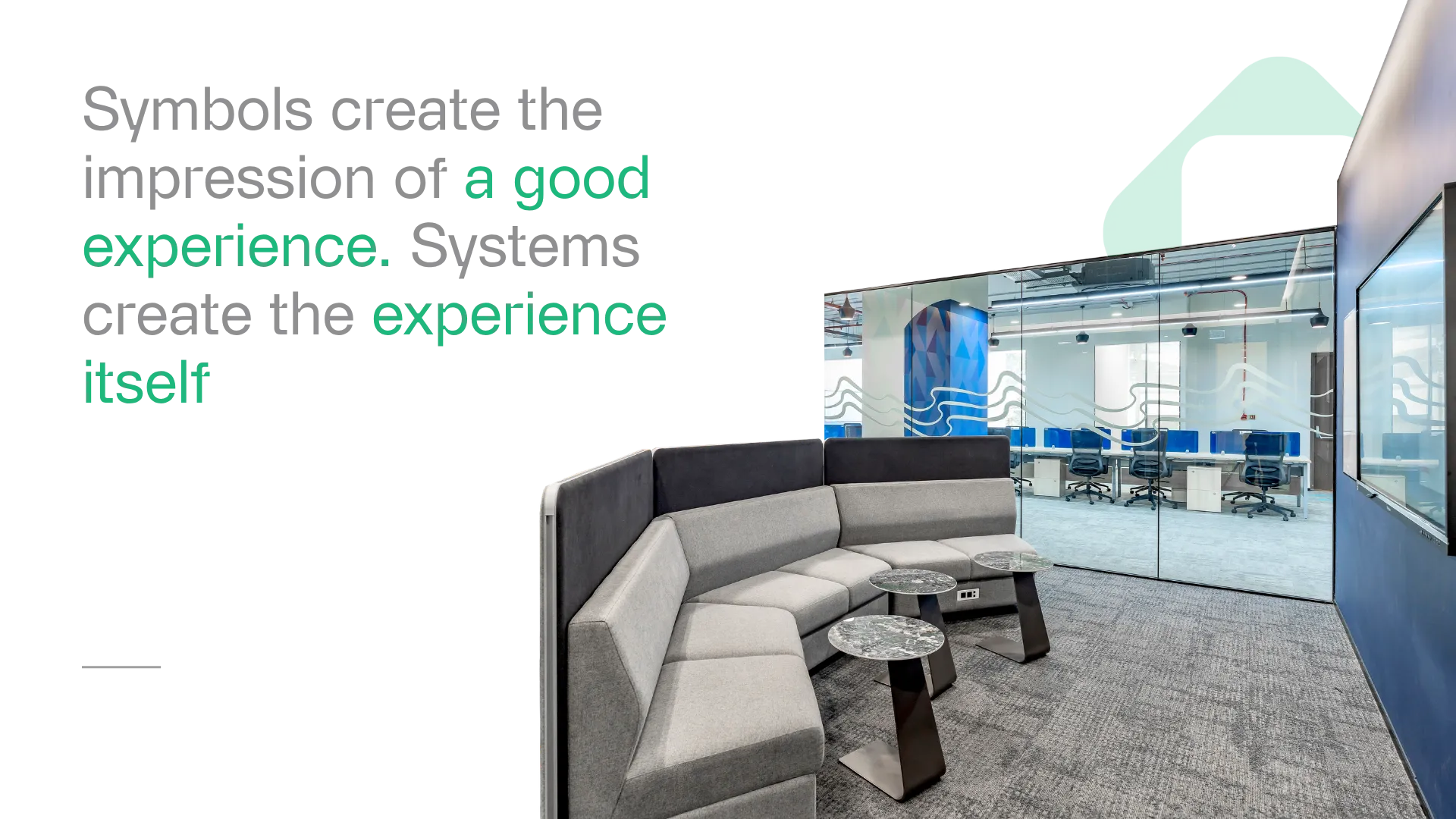
The promise is in the careers page, the offer letter, the all-hands presentation, and the values on the wall. The experience is in the meeting room that does not work, the approval that takes three weeks, the manager who said one thing last Tuesday and another thing this Tuesday, the office that makes focused work impossible, and the wifi that drops every afternoon.
Both are real. Only one of them determines whether people stay, perform, and bring their full capacity to the work the organisation hired them to do.
Employee experience is the difference between a company that asks people to do great work and a company that builds the conditions for great work to happen.
More Insights
.png)


%20(1).webp)


Thank you for your comment! It has been successfully submitted and will appear once it has been reviewed and approved.