Read More


.png)
What the Modern Workplace Actually Means in 2026
June 2, 2026



Most companies are still managing their workplace like it is 2012. Here is what it actually needs to be in 2026.
For most of the twentieth century, workplace meant a location. It was the address on the letterhead, the floor plan on the lease, the number of seats in the open plan. Companies measured it in square feet. They managed it through facilities teams. They thought about it mostly when the lease came up for renewal or when the headcount outgrew the floor.
That definition has not kept up with how work actually happens.
In 2026, the modern workplace is not just where people sit. It is the operating environment that shapes how teams focus, how people collaborate, how employees feel over time, how companies scale across cities, and how leaders make decisions about growth. Companies that still measure workplace by square footage are measuring the wrong thing. The ones moving ahead are asking a different question entirely, which is not how much space do we have, but what does our workplace help us do.
So What Is Workplace Actually Supposed to Be
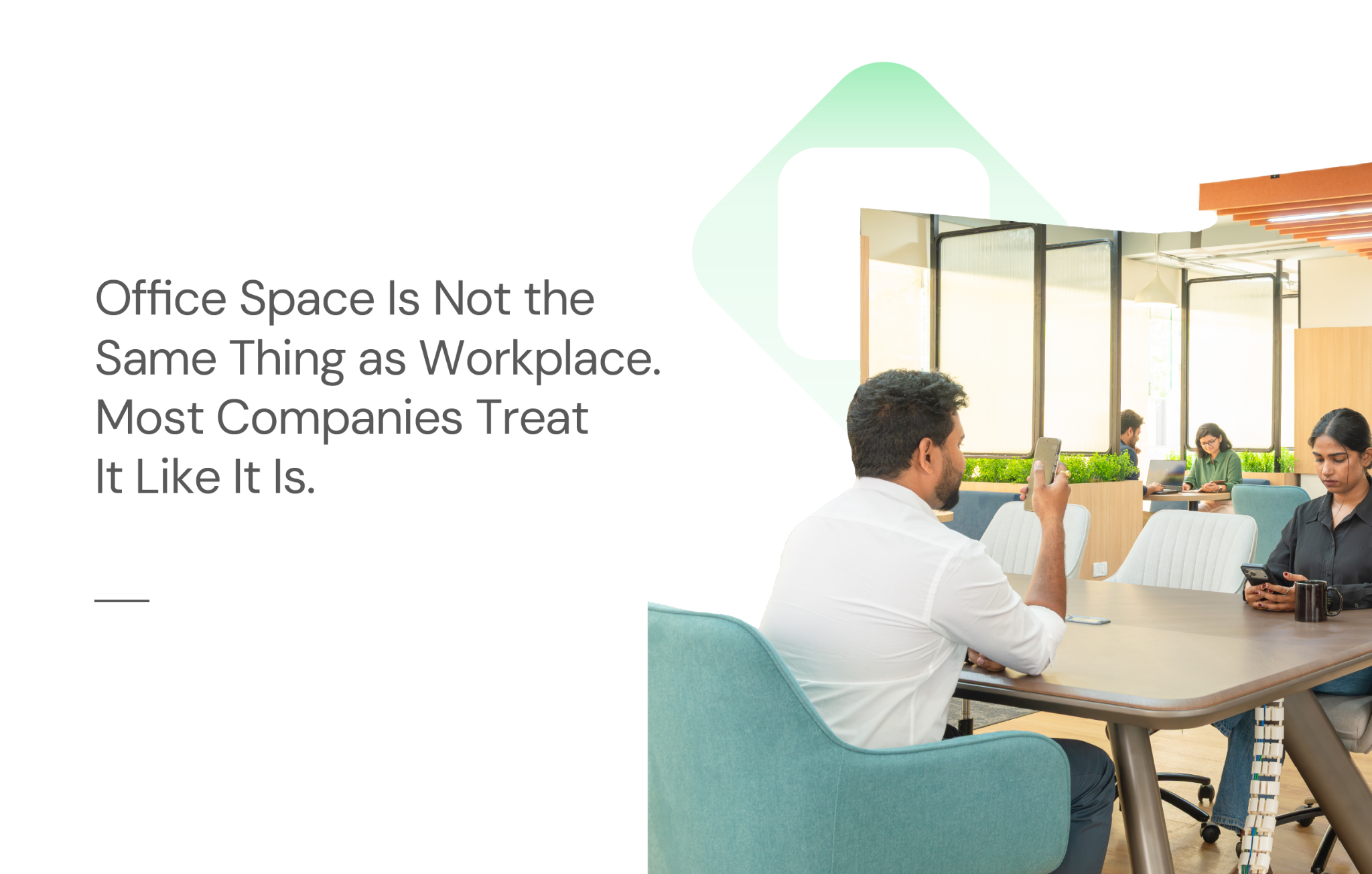
The traditional model treated workplace as a container. You filled it with desks, meeting rooms, and a pantry. You managed the lease. You renewed or relocated every few years based on headcount projections that were often wrong.
This model worked reasonably well when work was stable and co-located, when teams showed up to the same building every day, when collaboration meant being in the same room, and when the office was the only place professional work happened. None of those conditions reliably hold anymore.
Hybrid expectations changed why people come to the office. Scaling companies need infrastructure that grows with them, not against them. Enterprise teams operating across multiple cities need consistency in experience, security, and governance that a single-location lease model cannot provide. Global capability centres setting up in India need operational readiness, local compliance, and the kind of workplace that helps them attract talent in a competitive market.
The container model has no answer for any of this. A new definition does.
Getting One Right Is Not Enough If the Other Five Are Broken
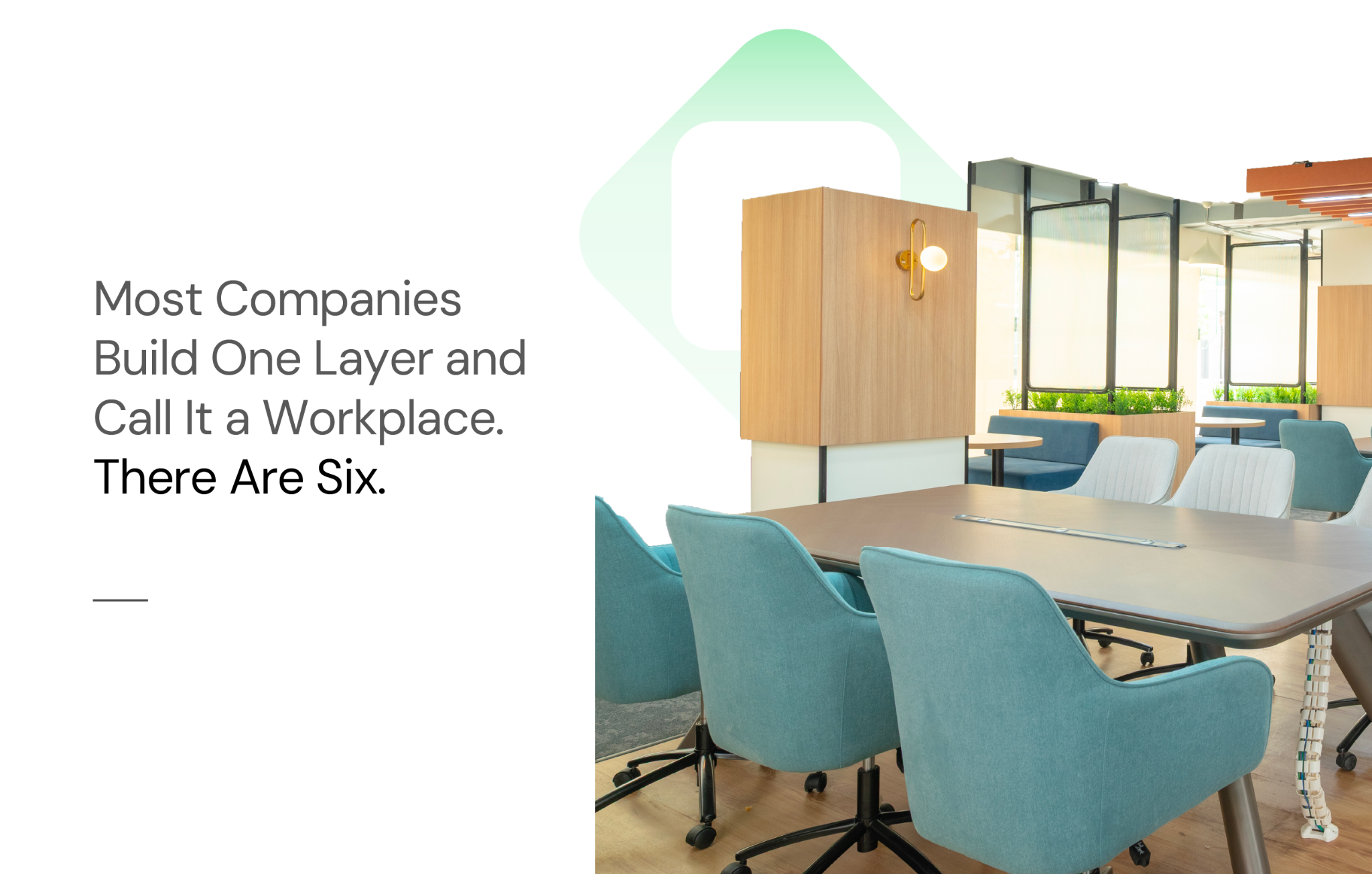
If the modern workplace is no longer just a location, what is it? The clearest way to think about it is as six layers, each of which has to work for the others to function.
Space Is the Foundation. But a Foundation Alone Is Not a Building.
Space is still where everything starts. The physical environment, the floor plan, the design, the light, the acoustics, the balance between open collaboration and quiet focus. But space in isolation is inert. It only becomes a workplace when the other five layers are operating around it.
Systems Are Invisible When They Work and Impossible to Ignore When They Do Not
The operational infrastructure that makes a space run. Technology, connectivity, access control, meeting room management, visitor experience, maintenance, and service delivery. Systems are invisible when they work. They are the only thing people talk about when they do not.
Service Is the Layer That Decides Whether a Workplace Feels Deliberate or Accidental
The human layer. Who is responsible for the day-to-day experience of the space. How quickly problems get resolved. Whether the people managing the workplace treat it as a facility to maintain or an environment to improve. Service is the layer that most directly determines whether a workplace feels deliberate or accidental.
Flexibility Is Not About Seat Count. It Is About Whether Your Workplace Can Keep Up With You.
The ability of the workplace to respond to change. Team sizes shift. Expansion happens faster than expected. A company that can scale its workspace without a nine-month procurement cycle moves differently from one that cannot. Flexibility is not just about seat count. It is about whether the workplace is a constraint on growth or a support for it.
Most Workplace Decisions Are Made Without Evidence. That Is Starting to Change.
How space is used, when it is used, which parts of it work and which do not, how employee experience changes over time and across locations. Most companies are making workplace decisions with almost no data. The ones beginning to instrument their environments are finding that the decisions look different when there is evidence behind them rather than assumption.
Experience Is Not the Launch Day. It Is the Tuesday Afternoon Six Months Later.
The sum of what it feels like to work in a space over time. Not the launch day, not the photograph for the careers page, but the Tuesday afternoon six months after move-in. Experience is what employees talk about when they are deciding whether to come in, what they say to candidates when asked what the company is like, and what determines whether the workplace is contributing to retention or quietly working against it.
According to Gensler's 2026 Global Workplace Survey, the workplace has not kept pace with stabilised work patterns. Two-thirds of employees report modifying their workspace to compensate for performance gaps, while one in four have used informal fixes for ergonomics, temperature, or visual privacy. That makes workplace experience an operational issue, not a design afterthought.
These six layers are not independent. A beautifully designed space with broken systems delivers a poor experience. Excellent service on top of an inflexible lease cannot respond when the company doubles. Data without the willingness to act on it is noise. The workplace works when all six layers are considered together, not handed to separate teams with separate budgets and separate priorities.
What the Workplace Now Needs to Do
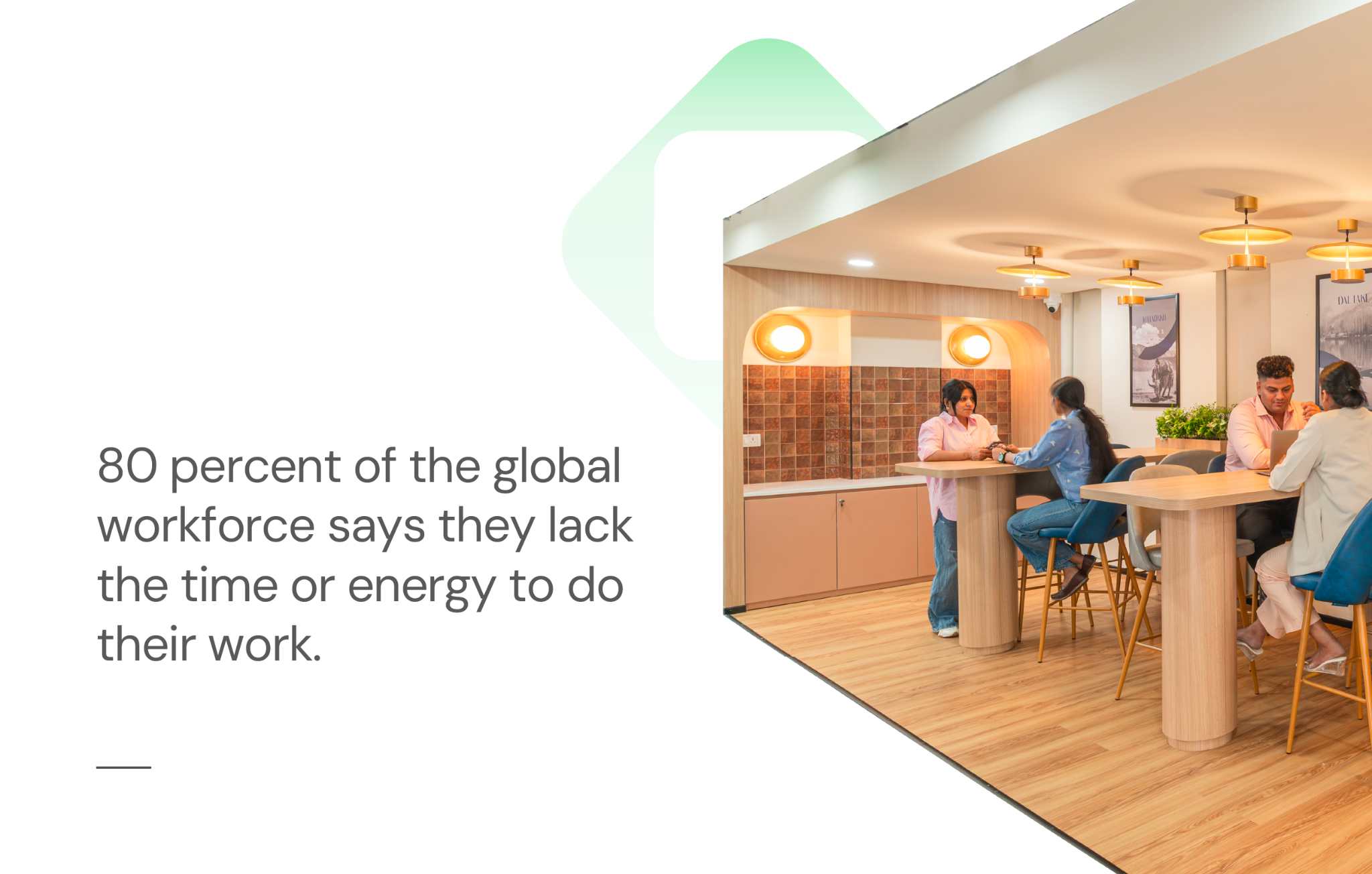
The business case for thinking about the workplace/ this way is not soft. It is operational.
A workplace that helps teams focus reduces the friction that slows decisions. A workplace that supports collaboration across locations reduces the coordination cost that scales with headcount. A workplace that gives leaders visibility into how space is used and experienced allows them to make better decisions about where to invest and where to change.
CBRE’s 2025 India Office Occupier Survey found that 73% of companies intend to use physical workplace design as a key focus area to enhance office experience. The same survey found that 72% of occupiers expect to expand their portfolio by 10% or more over the next two years, showing that Indian office strategy is being shaped by both growth and experience.
Microsoft’s 2025 Work Trend Index captures the pressure many organisations are now facing: leaders need productivity to increase, while employees are already operating at the edge of their available time and energy. In that context, the workplace cannot remain a passive container for headcount. If it creates friction, it becomes part of the productivity problem. If it is designed around focus, collaboration, recovery, and ease of use, it becomes part of the solution.
The companies navigating this shift are not necessarily spending more. They are spending differently, and asking different questions at the start of the process. Not how much space do we need, but what kind of environment helps our people do their best work. Not what is the lowest cost per seat, but what does this workplace need to do for the next three years of growth.
Stop Measuring What Your Office Costs. Start Measuring What It Does.
The metric of square feet per employee was always a proxy. It measured occupation, not performance. It told companies how much space they had, not what that space was doing.
A more complete set of modern workplace measures looks different.
How quickly can the workplace respond to growth or contraction? What is the experience score among the people who use it everyday? How consistent is that experience across locations? How much operational time is leadership spending on workplace problems that could be resolved at a systems level. What does the workplace signal to candidates, clients, and partners who walk through it.
These are not abstract questions. They are the questions that determine whether the workplace is contributing to the business or quietly working against it.
The DevX Signal Point of View
DevX was built on the belief that the workplace is infrastructure for human potential. Not a cost line to be minimised. Not a perk to be described in offer letters. An operating environment that shapes how people work, how teams grow, and how companies scale.
The six-layer framework above reflects how DevX thinks about the workplace question across the companies it works with. Space matters. So do systems, service, flexibility, data, and experience. And so does the intelligence layer underneath, the ability to understand how an environment is performing and to improve it over time rather than waiting for the next lease cycle to start again.
In 2026, the workplace will not be judged by how much space a company has. It will be judged by what that space helps people and businesses do better.
More Insights


%20(1).webp)


Thank you for your comment! It has been successfully submitted and will appear once it has been reviewed and approved.