Read More


Your Lease Was Signed for a Company That No Longer Exists
November 16, 2026



Most scaling companies treat a long lease as proof they have arrived. The hiring plan moves faster than the walls ever will. The answer is to commit only to what you know.
TLDR
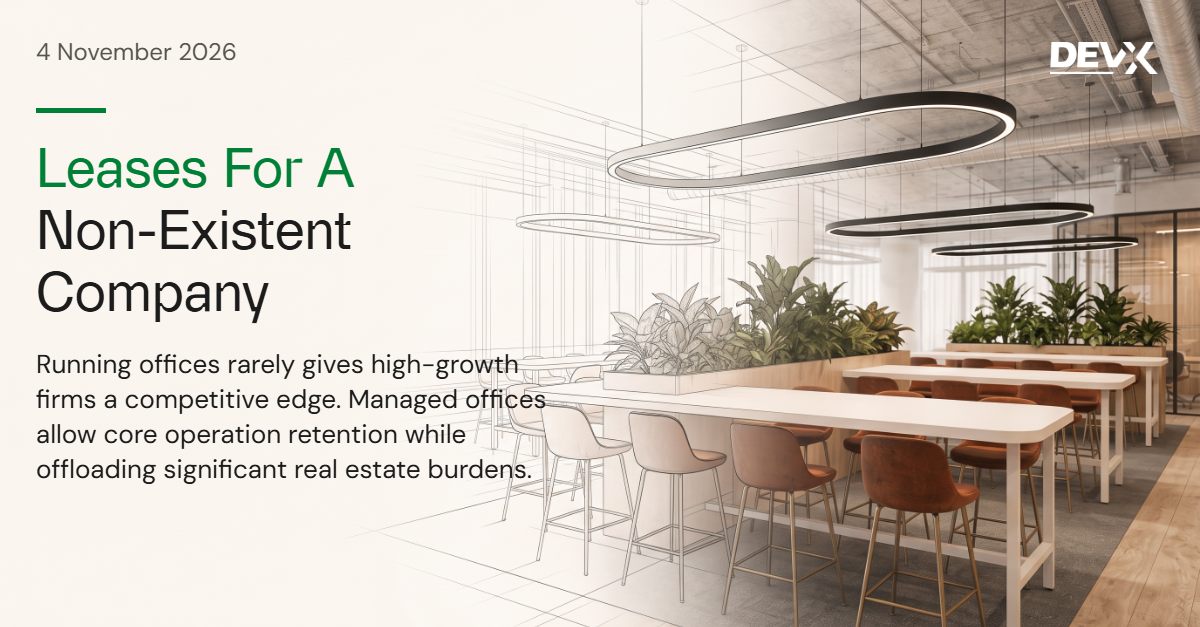
- Running your own office rarely gives a high-growth company an edge. Managed offices let you keep the work and drop the burden.
- Grade A fit-out costs range between ₹5,500 and ₹6,000 per sq ft in India, as noted by ETCFO.
- Traditional enterprise office lease durations typically relied on 7 to 10-year commitments, per ETCFO data. Hiring no longer runs that way.
- Flex is gaining ground. JLL reported a 26.6% flex share of India's Q4 2025 leasing activity.
- Lease only the headcount you are near certain of. Flex everything above it.
The Cost Nobody Budgets For
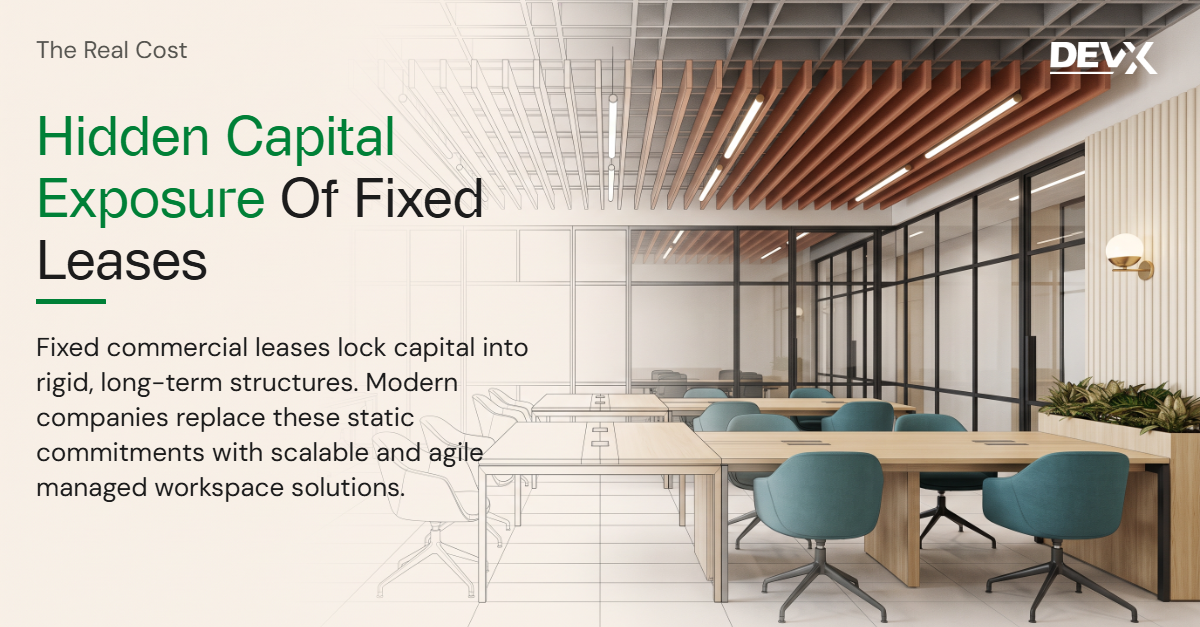
Our position is simple. Managing your own office is not a business advantage for a high-growth company. Managed offices exist because space should move with the business, not hold it still.
The old model rested on tidy assumptions. ETCFO notes that firms once justified a 7 to 10-year lease against steady headcount and stable geography.
A Series B consumer brand has neither. Hiring runs on quarterly priorities. A city can matter less after one board meeting. The lease does not care.
The fit-out makes it worse. ETCFO puts Grade A fit-out costs between ₹5,500 and ₹6,000 per sq ft in India's key commercial markets. These are market averages. They are also hard to recover. Cabling and joinery stay behind when you leave.
What to ask now. Pull your last three headcount forecasts. Compare each with what happened. That gap is your real lease risk.
Busy Is Not the Same as Predictable
One fair counterpoint belongs here. Many offices are full.
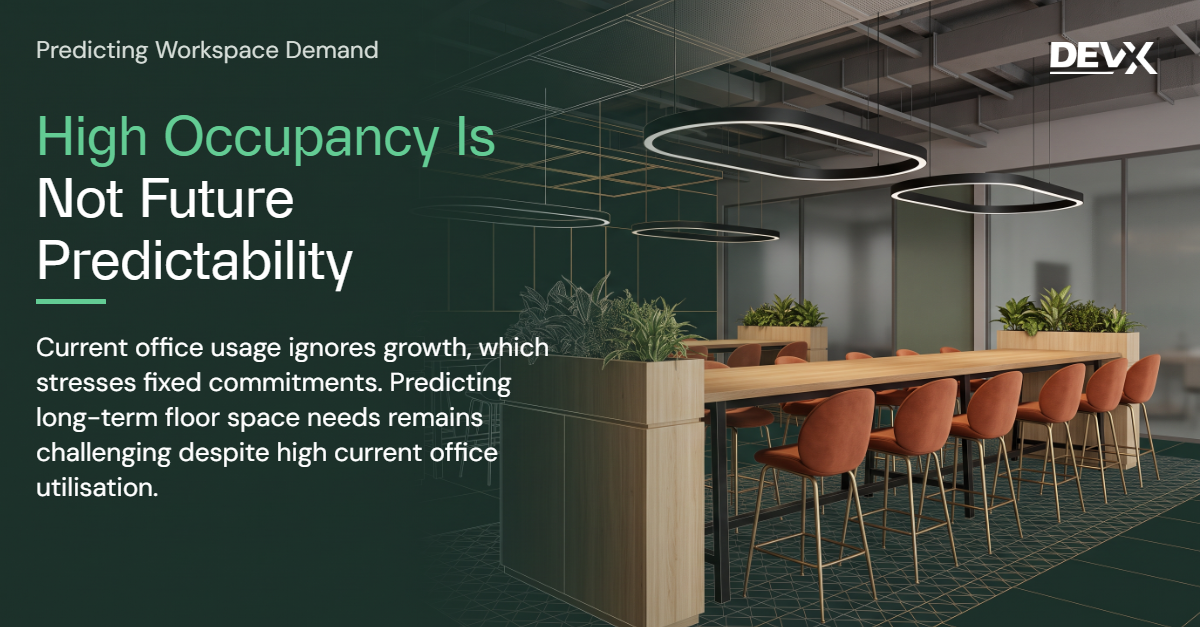
CBRE Research data, reported by CBRE, found 55% of surveyed firms indicate an office utilisation rate exceeding 75%. Office utilisation is healthy for many occupiers.
That matters. It also misses the point. A full office today says little about the floor you need in two years.
CBRE Research data, reported by CBRE, found 72% of occupiers expect to expand their portfolios by 10% or more over two years. Expansion at that pace stresses any fixed commitment.
So the question changes. It is not whether seats are used. It is whether you can change the count without a write-off.
Lease Your Floor, Flex Your Growth
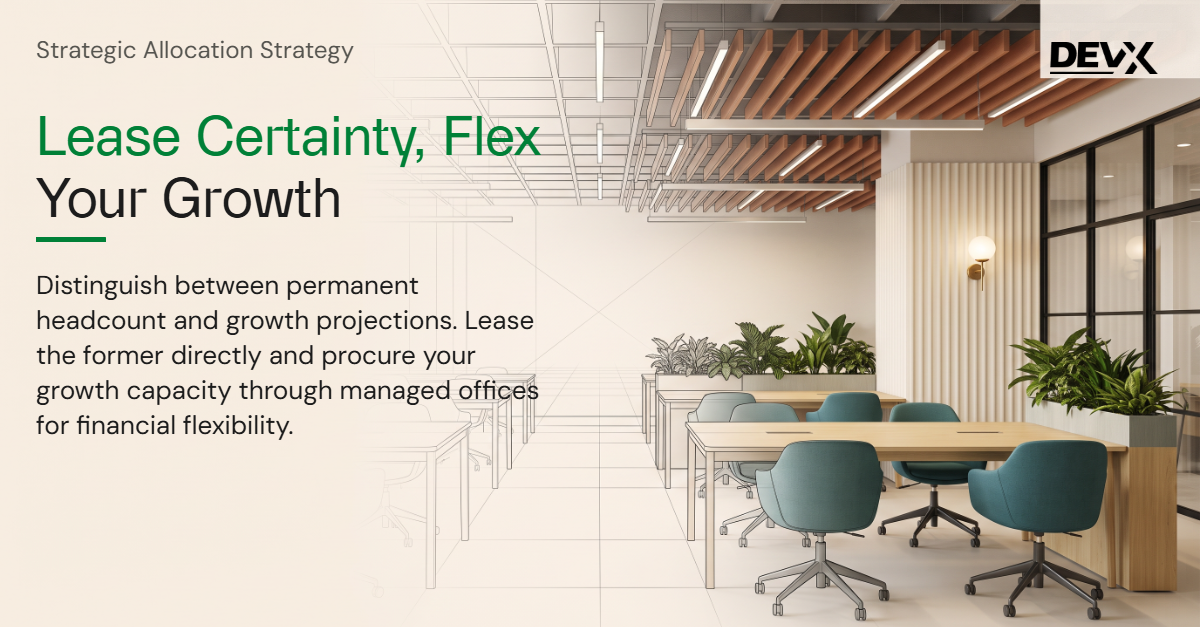
Every growth company has two kinds of headcount. There is the floor, the people you keep through a hard year. Then there is growth, the people the plan says you will hire.
They deserve different contracts.
We suggest a simple heuristic. It is our rule of thumb, not an industry standard. Lease directly only the headcount you would stake your bonus on holding. Procure growth capacity through managed offices.
- Write down the current headcount.
- Write down the projection.
- Ask finance, HR and business heads which number they would defend.
- Lease that number. Flex the rest.
If the floor and the projection sit close together, a direct lease may win. Mature teams with fixed geography often belong in long leases. The rule does not oppose leasing. It opposes leasing your optimism.
Illustrative example: Suppose a 200-person consumer company plans 100 hires in a year. Assume flex adds cost per seat a month and needs no capex. Assume a direct build costs a large capital sum. That capex equals a specific amount of seat-months of premium (our arithmetic). Across 100 growth seats, that represents a set duration. If only 70 of those seats fill, the break-even stretches further.
Answering the Fair Objections
Flex costs more per seat. It often does on headline rent. We will not pretend otherwise. Shell rent is not your full cost, though. Total occupancy expenses include amortisation, maintenance, compliance, and internal time, as described by ETCFO. Compare totals, not headlines.
Managed space cannot carry our brand. Generic flex can feel generic. That concession is real. Ask any provider what design control you get, who owns the build and what happens at exit. Then judge.
What about the GCC case? ETCFO notes that if a centre's timeframe for mandate changes is within 18 months, a managed arrangement can adjust without fit-out write-offs. For GCC expansion, that option has real value. Put it in the model.
The Market Is Already Moving
Indian commercial real estate is voting with square feet. JLL reports gross leasing hit 83.3 million sq ft for the year 2025. Flex reached its highest quarterly share of 26.6% in Q4, according to JLL.
Knight Frank's tracker agrees from another angle. Flex operators leased approximately 18.6 million sq ft in 2025, the segment's highest annual absorption on record. ETCFO estimates flexible workspace share of total Indian office absorption at 15–20%.
Now put one question to each leader.
- CFO. Can you defend every rupee of fit-out capex if the plan shifts in month 18?
- CHRO. How many offers last year waited on desks rather than approvals?
- COO. How many facilities vendors does your team manage today?
The Bigger Picture
The best offices do real work. They recruit. They carry the brand. They bring hybrid teams back with purpose.
None of that needs you to run them.
Office space is becoming a capital allocation decision, not a property one. Before your next renewal, name the floor you are sure of. Commit to that alone. The winners will not have the grandest headquarters. They will have space that moved as fast as they did.
More Insights



Thank you for your comment! It has been successfully submitted and will appear once it has been reviewed and approved.