Read More


What to Ask Before Choosing a Managed Office Partner
November 6, 2026



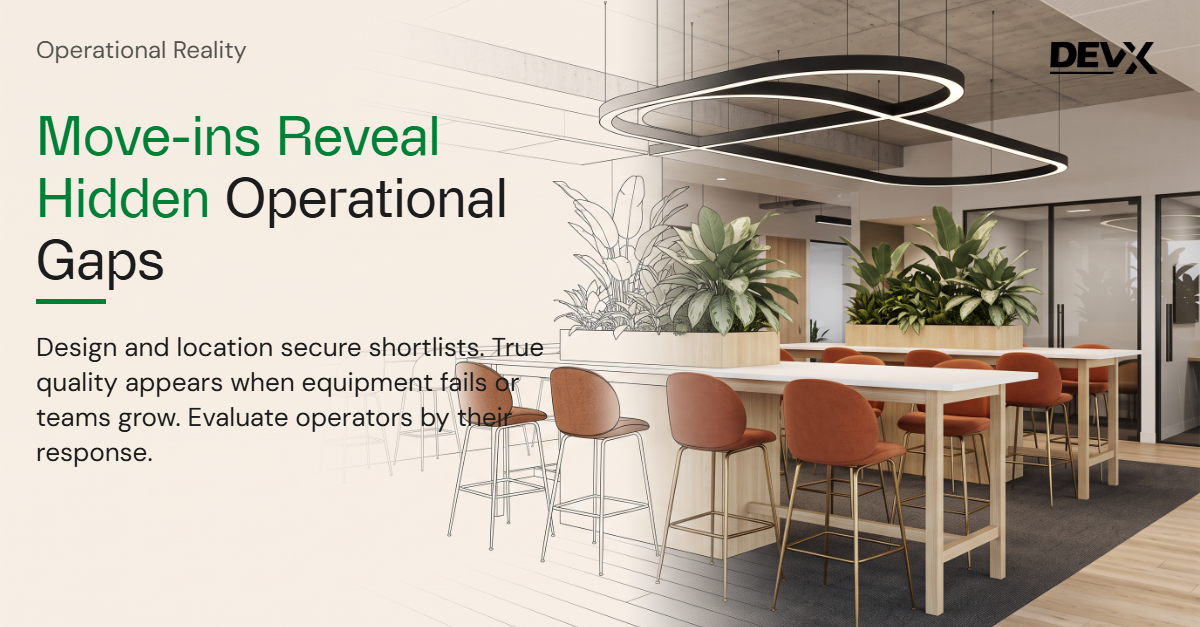
Most shortlists are decided on the site tour. The tour tests the space, not the operator behind it. The months after move-in show the difference.

What to Ask Before Choosing a Managed Office Partner
Most shortlists are decided on the site tour. The tour tests the space, not the operator behind it. The months after move-in show the difference.
TLDR
- Location, cost and design get a partner shortlisted. They say little about life after move-in.
- Choosing a managed office partner is an operating decision with a long tail.
- Flexible seat terms beat fixed counts when growth is uncertain, and lose when growth is certain.
- The CFO, CHRO, COO, facilities head and GCC leader each need a different answer.
- Price and operations can be weighed with one rule, using your own numbers.
The site tour rarely fails. The lobby is sharp. The price fits.
The trouble starts a few months in, when the partner has to run the space, not show it. Choosing a managed office partner is an operating decision. The right questions reveal whether a partner can carry a company after move-in.
Location, Cost and Looks Only Get You Shortlisted
These three matter. They are also the easiest to judge. One visit settles them, and most shortlisted partners pass.
That is the problem. They get partners into the room. They do not separate them.
Picture a quarter after move-in. Two teams need to sit together and no adjacent space exists. A new hire waits for an access card. A meeting room screen fails, and nobody owns the fix.
CBRE data, reported by CBRE UK, describes a managed office as one run by a third-party provider to the tenant's specifications. Its guidance includes agreed maintenance response times in the offer. That is where partners differ. The fit-out is visible on day one. The operation is felt every day after.
The horizon is long. Habitaction, a fit-out firm advising large organisations, notes the choice may shape where a business works for ten years. A decade is a long time to live with a weak operator.
So test the handover, not the brochure. Ask whether the people who build the space also answer for running it, or whether a second team inherits someone else's snags.
A site tour shows you the space. The first broken room shows you the partner.
Rushit Shah, Director, DevX
Ask this. Who owns a fault from a report to fix? How fast is the fix, and where is it tracked?
Scale Without Renegotiating

Headcount rarely moves in straight lines. A launch adds a team. A restructure removes one.
Yeo & Yeo, writing on managed services, warns that rigid packages and inflexible contracts create problems when needs change. Offices carry a similar risk. The analogy breaks on speed, though. A desk takes longer to add than a software licence.
Illustrative example: Suppose a team of 100 expecting to reach 120. Partner A charges ₹10,000 per desk, fixed at 120 desks, so ₹12,00,000 a month. Partner B charges ₹10,500 per desk for desks actually used. At 100 desks, Partner B costs ₹10,50,000, saving ₹1,50,000 a month. At 120 desks, Partner B costs ₹12,60,000, so Partner A wins by ₹60,000. All rates and headcounts are assumptions. The arithmetic is ours.
The flexible term wins while the team sits well below its ceiling. The fixed term wins once growth is certain and arrives early. Model both cases, with your own rates, before signing.
One Partner, Five Different Tests
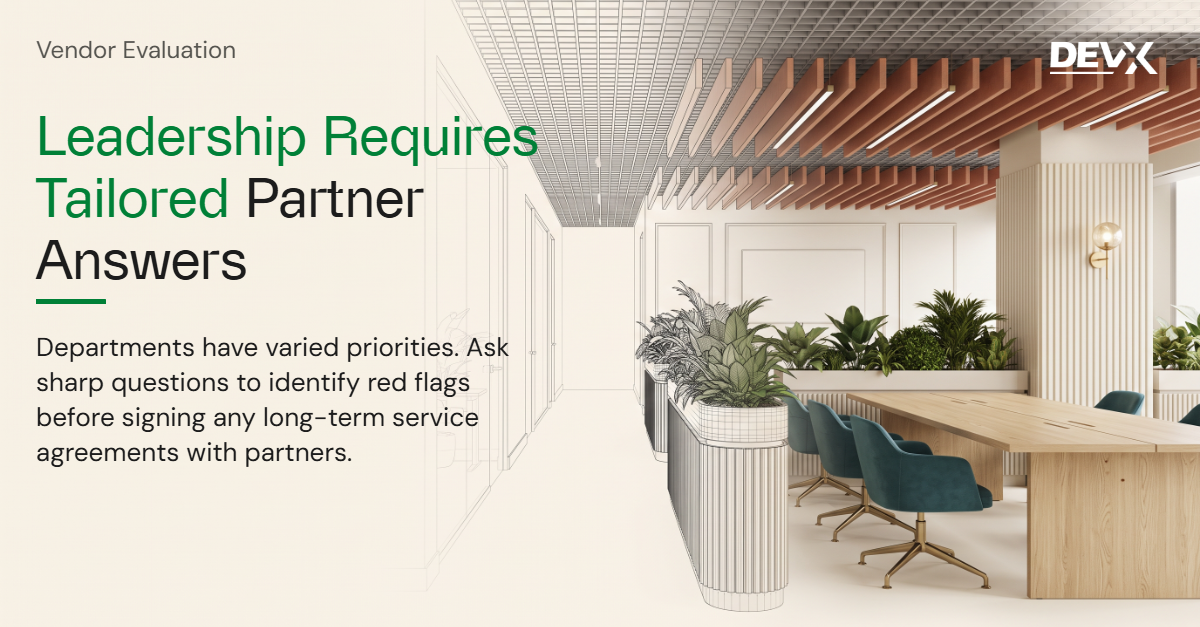
Each leader reads the same partner differently. Use this table on the shortlist call.
The GCC row deserves weight. JLL lists secure rooms and controlled access as crucial for centres handling sensitive information. Expansion space that misses that standard is not expansion space.
Must Have, Good to Have and Avoid
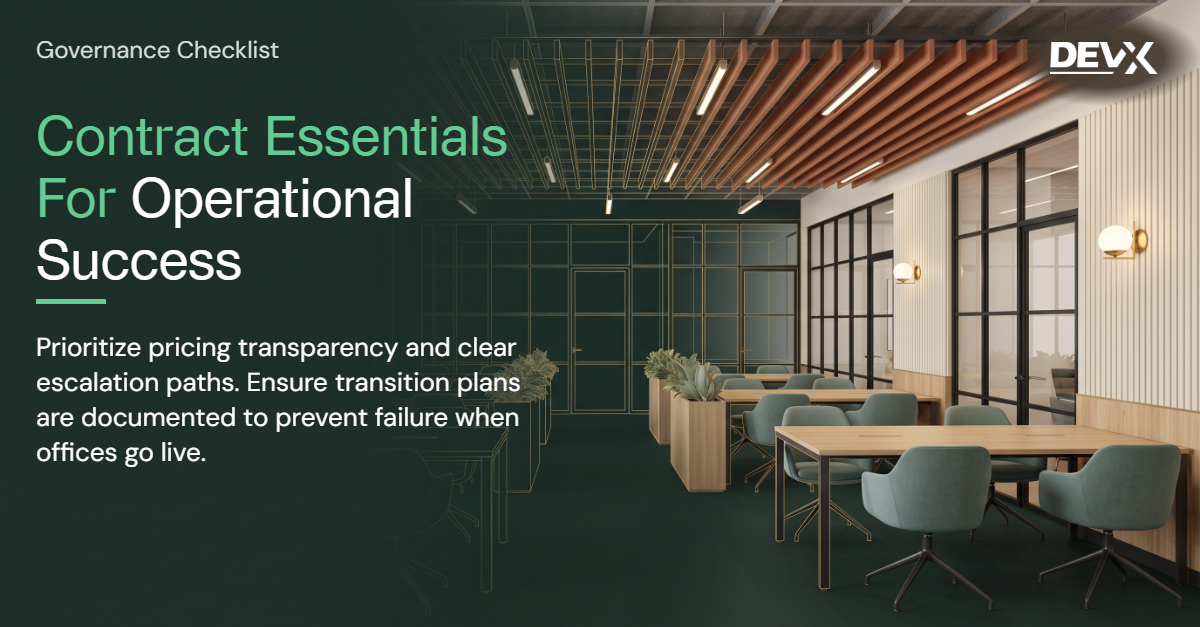
Yeo & Yeo cautions against providers who are not transparent about pricing. Armanino lists neglecting to plan the transition among common failures.
A short process.
- Audit how the current office works before touring anyone else's.
- Shortlist on location, cost and design.
- Put every shortlisted partner through the tests above.
- Model a growth case and a slowdown case.
- Get governance, escalation names and exit terms in writing before signing.
The Honest Objections
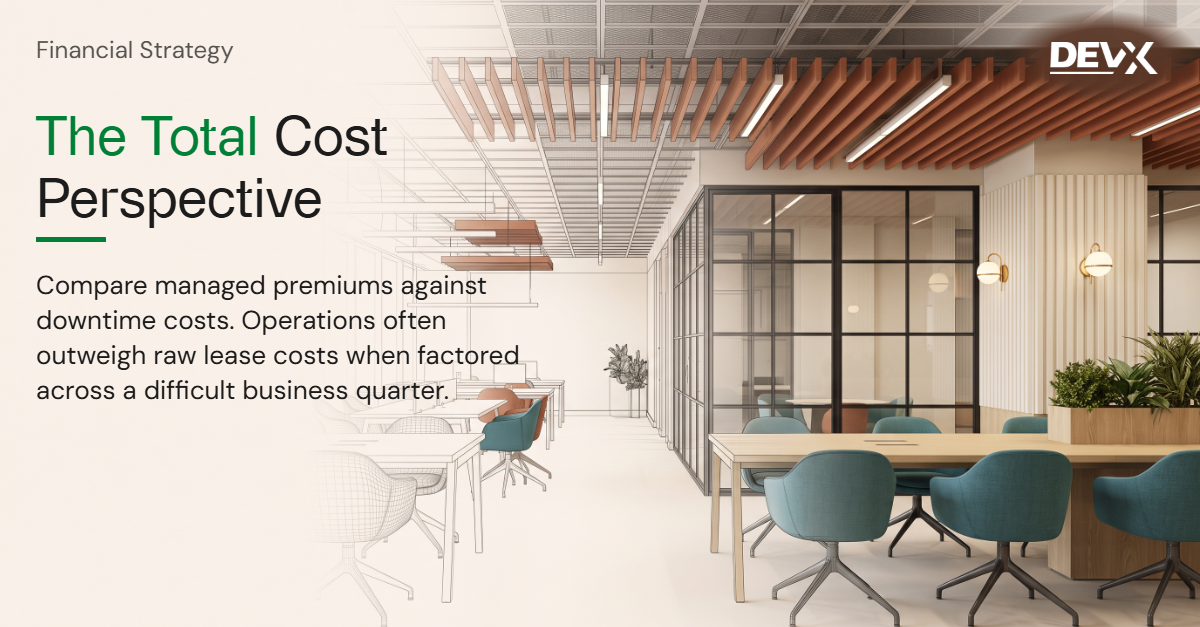
Managed offices cost more. Per seat, they can. A lease often looks cheaper on paper. So weigh it this way. Price the lease fully, adding fit-out, facility staff and empty desks in a slow year. Then put a number on one bad quarter. Count hours lost to unresolved faults, multiplied by loaded hourly cost. Add the cost of hires who start late for want of a seat. Finance and HR already hold both figures. If the managed premium is smaller than that total, operations should outweigh price. If it is larger, take the lease.
We want direct control. That instinct is sound. A company knows its culture best. Split decisions in two. Anything that changes how people work stays in-house. Anything that only runs the building goes to the partner. Write both lists into the contract.
Shared space worries our security team. The concern is reasonable. Shared buildings carry shared risk. Ask for a private floor with dedicated access control. If a partner cannot offer it, keep sensitive teams elsewhere.

The Bigger Picture
It is tempting to call a managed office plug-and-play. The analogy breaks quickly. A software seat appears in minutes. A desk needs floor space, cabling, furniture and approvals.
So the useful question is not how fast a partner can scale. It is what they can scale, by when and at what cost. Ask it early, and surprises become terms negotiated rather than problems inherited.
More Insights



Thank you for your comment! It has been successfully submitted and will appear once it has been reviewed and approved.