
Read More



India Is Rewriting the Rules of Work and Most Companies Have Not Read the New Draft
June 15, 2026




The state of work has changed and most companies are still following the old rules, this article covers what the data says and what smart organisations are doing about it
Something significant has shifted in how India works. Not gradually, the way markets usually move, but decisively, in a way that is showing up in the data, in the conversations happening inside enterprise boardrooms, and in the decisions companies are making about where to put their teams and what to build around them.
India's office market crossed 86 million square feet of leasing in 2025, an all-time high, approximately 43 to 44 percent above pre-pandemic levels, according to Knight Frank. The country's total office stock crossed one billion square feet in the same year. These are not real estate statistics. They are signals about how seriously the world's most consequential companies are betting on India as a place to do real work, not support work, not back-office work, but the kind of work that shapes products, drives strategy, and builds competitive advantage.
The companies reading that signal correctly are building differently. The ones treating it as a real estate cycle are going to find themselves significantly behind.
How Work Is Changing in India
The return to office in India happened faster and more completely than in almost any comparable market. But the return did not restore the old relationship between Indian employees and their workplaces. It revealed how much that relationship had changed.
JLL's Beyond Mandates research on the future of work in India captures the tension precisely. 96 percent of Indian employees report enjoying working from the office. 83 percent feel positive about return to office mandates. By almost every attitudinal measure, India is an office-positive workforce.
And yet significant gaps remain. After basic desk and collaboration needs are met, JLL identifies consistent shortfalls in wellness facilities, acoustic comfort, social infrastructure, and quality food services. One in two Indian employees rate quality food services as the single most important factor in improving their day at work.
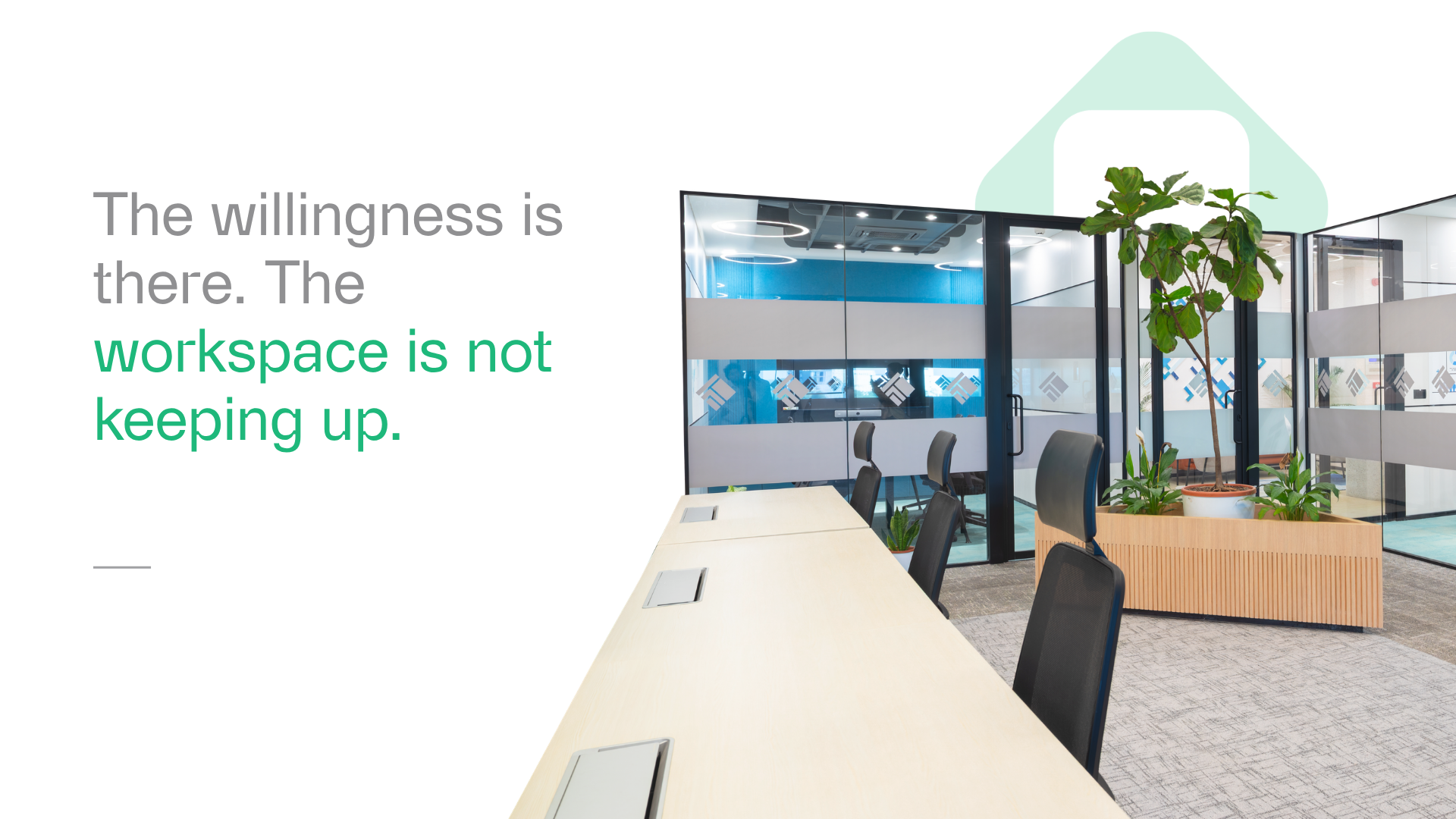
This matters for reasons that go beyond employee satisfaction. Microsoft's 2025 Work Trend Index found that 80 percent of the global workforce reports lacking the time or energy to do their work.
In India, where working hours are among the longest in the world and commute times in major cities add considerable strain to the working day, that figure is not abstract. A workplace that does not actively help employees manage their energy and focus is not a neutral backdrop to work. It is a tax on performance.
The organisations that understand this have stopped asking how many seats they need. They are asking what their workplace needs to do. That is a different question and it produces a different kind of office.
Global Companies Came to India for Cost. They Are Staying for Something Else Entirely.
Five years ago the dominant narrative about India in global boardrooms was cost arbitrage. Hire in India because it is significantly cheaper than hiring in the United States or Western Europe. Build support functions in Bengaluru and Hyderabad. Keep the core work closer to home.
That narrative is not wrong exactly. It is just no longer the whole story and in many cases it is no longer even the primary story.
India now has over 1,700 global capability centres operating across more than 2,975 units, employing over 1.9 million people and generating 64.6 billion USD in revenue in FY2024, according to NASSCOM's GCC Landscape Report. By 2030, NASSCOM projects 2,100 to 2,200 GCCs with a workforce of 2.5 to 2.8 million people generating between 99 and 105 billion USD in revenue.
The more significant shift is not in the numbers. It is in what these centres are doing.
Over 50 percent of GCCs are now driving portfolio or transformation initiatives. Nearly 90 percent operate as multifunctional centres. More than 185 artificial intelligence and machine learning centres of excellence have been established across Indian GCCs.
Engineering, research, and development GCCs are growing 1.3 times faster than overall GCC growth. The functions being built inside Indian GCCs are not support functions anymore. They are core functions. Decisions that used to be made in New York, London, or Singapore are being made in Bengaluru, Hyderabad, and Pune.
In Q1 2026, JLL data shows GCCs accounted for 45.5 percent of gross office leasing in India and represented approximately 50 percent of active space requirements in the market. Global capability centres are now the single largest driver of Indian office demand. That is not a support story. That is a strategy story.
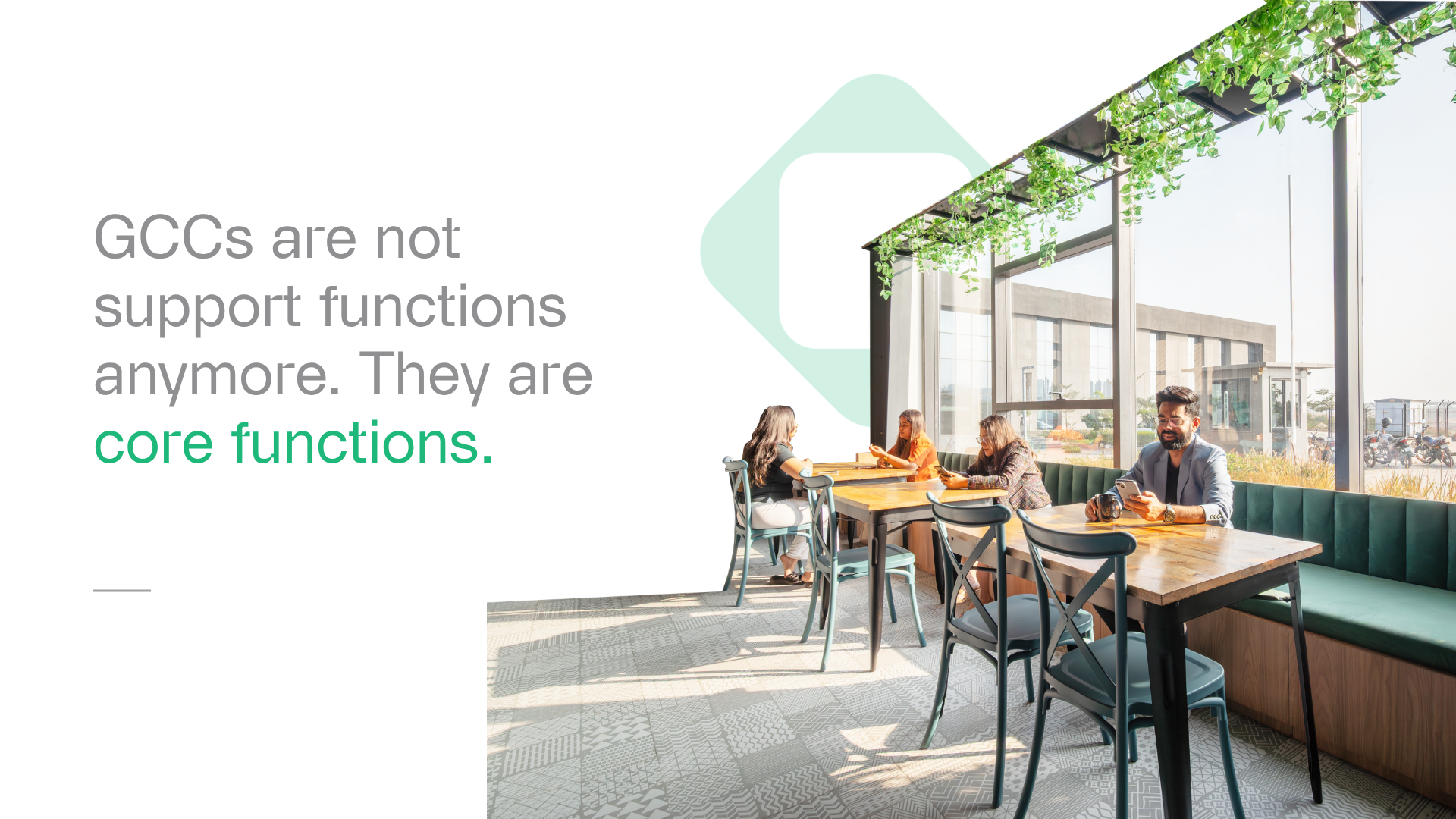
The implication for companies building in India is direct. If the work being done here is core work, the workspace supporting it needs to be core infrastructure. A compromised workplace is not just an operational inconvenience. It is a strategic liability.
What the Indian Workplace Is Being Asked to Do in 2026
The market has read the signal. The question is whether the companies occupying that market have read it too.
Colliers forecasts 70 to 75 million square feet of Grade A office demand in India in 2026. Flex operators are expected to lease 15 to 18 million square feet of that, contributing 20 to 25 percent of overall leasing activity.
Total flex stock is projected to exceed 100 million square feet by 2027. CBRE's 2025 India Office Occupier Survey found that 73 percent of companies intend to use physical workplace design as a key focus area to enhance office experience, and 72 percent expect to expand their portfolio by 10 percent or more over the next two years.
Growth and quality are moving together. That combination is new.
For most of India's commercial real estate history, growth and quality moved in opposite directions. Companies took more space when they needed it and worried about the quality of that space when they could afford to.
The current moment is different. The enterprises driving demand, the GCCs, the technology companies, the financial services firms, the global professional services organisations, are not taking space and hoping it performs. They are specifying what they need before they sign and walking away from options that do not meet the brief.
The managed and flexible office segment is where this quality demand is most concentrated. ICRA has noted that the share of flex workspaces in India's commercial office segment is expected to more than double to between 12.5 and 13.5 percent by March 2027, from 5.3 percent in FY2020. That growth is not being driven by startups looking for hot desks. It is being driven by enterprises that need operational flexibility, multi-city consistency, and a workspace partner who can hold the full outcome together across locations, not just hand over a key.
India Rewards Companies That Build Seriously
The companies navigating this moment most effectively are asking different questions from the ones still treating workspace as overhead.
They are not asking how much space they need. They are asking what kind of environment helps their teams do the work India has become capable of doing. They are not asking what the lowest cost per seat is. They are asking what the cost of a workplace that does not support performance looks like six months after move-in, in attrition numbers, in hiring conversion rates, in the speed at which a new city becomes productive.
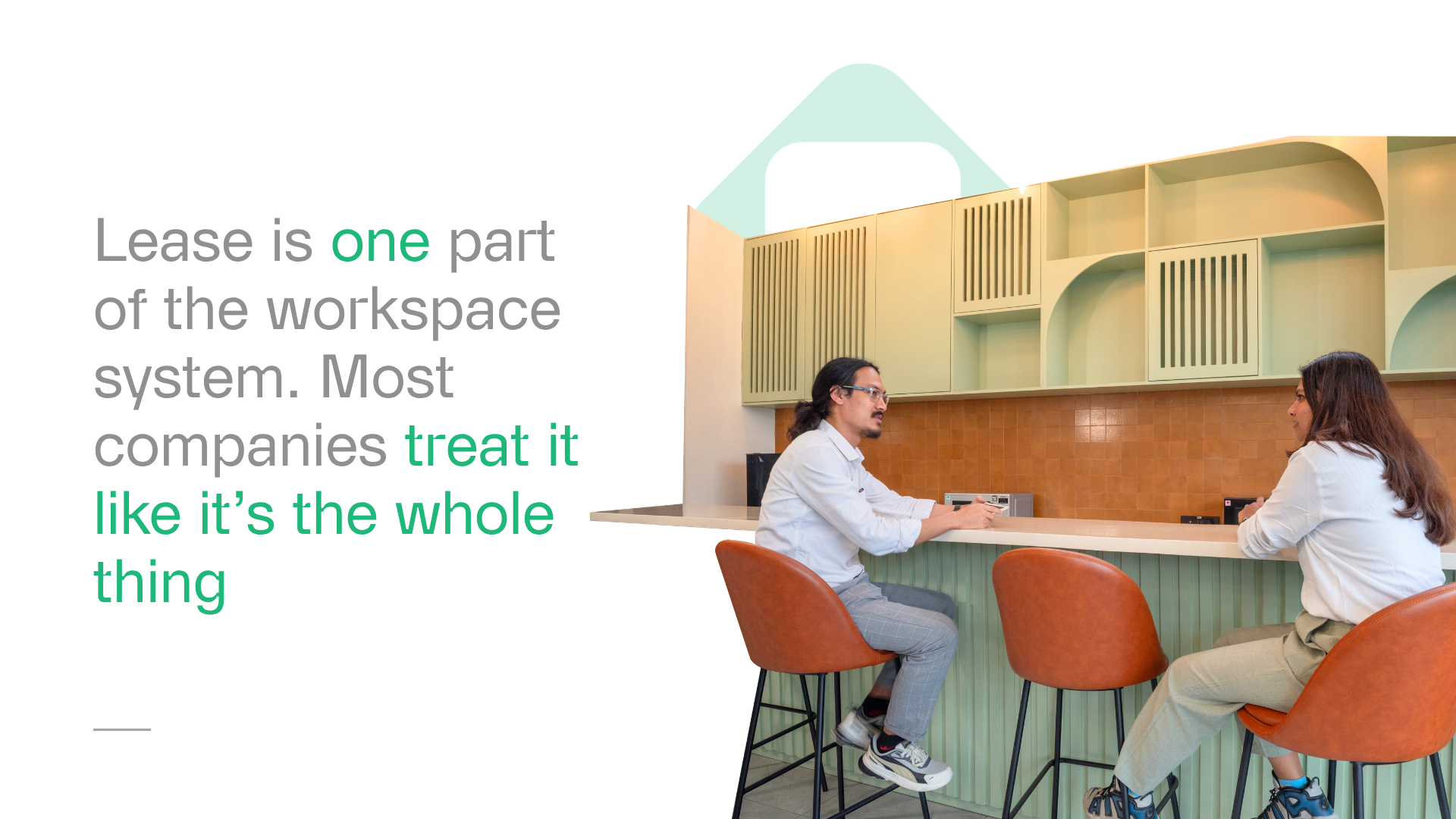
They are also thinking about workspace as a system rather than a transaction. The lease is one part of that system. The design is another. The operational layer underneath, the facilities management, the technology infrastructure, the service quality, the data that tells them whether the space is actually working, is the part most companies underestimate and most workspace providers underprepare for.
India's Tier-2 markets are becoming part of this calculation in ways they were not three years ago. NASSCOM identifies over 215 GCC units in emerging locations including Ahmedabad, Thiruvananthapuram, and Coimbatore, with more than 71,000 engineering, research, development, and IT-BPM talent already present and cost advantages of 25 to 30 percent versus Tier-1 cities.
Colliers describes companies adopting distributed headquarters, satellite, and flex models rather than consolidating entirely into one or two primary cities. The operational complexity of building across multiple cities with consistent quality is the challenge most companies discover later than they should.
Closing Thoughts
India's office market is not in a cycle. It is in a transformation. The difference matters because cycles normalise and return to prior conditions. Transformations do not.
The companies that treat this moment as a real estate opportunity, more space, better locations, competitive rents, will capture some of it. The companies that treat it as an infrastructure opportunity, the chance to build the operational foundation that lets Indian teams perform at the level India is now capable of, will capture something more durable.
The rules of work in India have changed. The companies that have read the new draft are already building to it. The ones that have not will recognise the gap when they see what the others have built.
More Insights


Thank you for your comment! It has been successfully submitted and will appear once it has been reviewed and approved.